6 weekend plans in Madrid
If you’ve read our previous posts, you’ll know that living at Be Casa puts you just a step away from one of the biggest and most exciting European capitals, and that’s an opportunity you can’t miss. In this post we recommend six things to do in Madrid. Or rather, six areas where you have a thousand options to plan your own weekend. Shall we start?
1. The Madrid of the Habsburgs
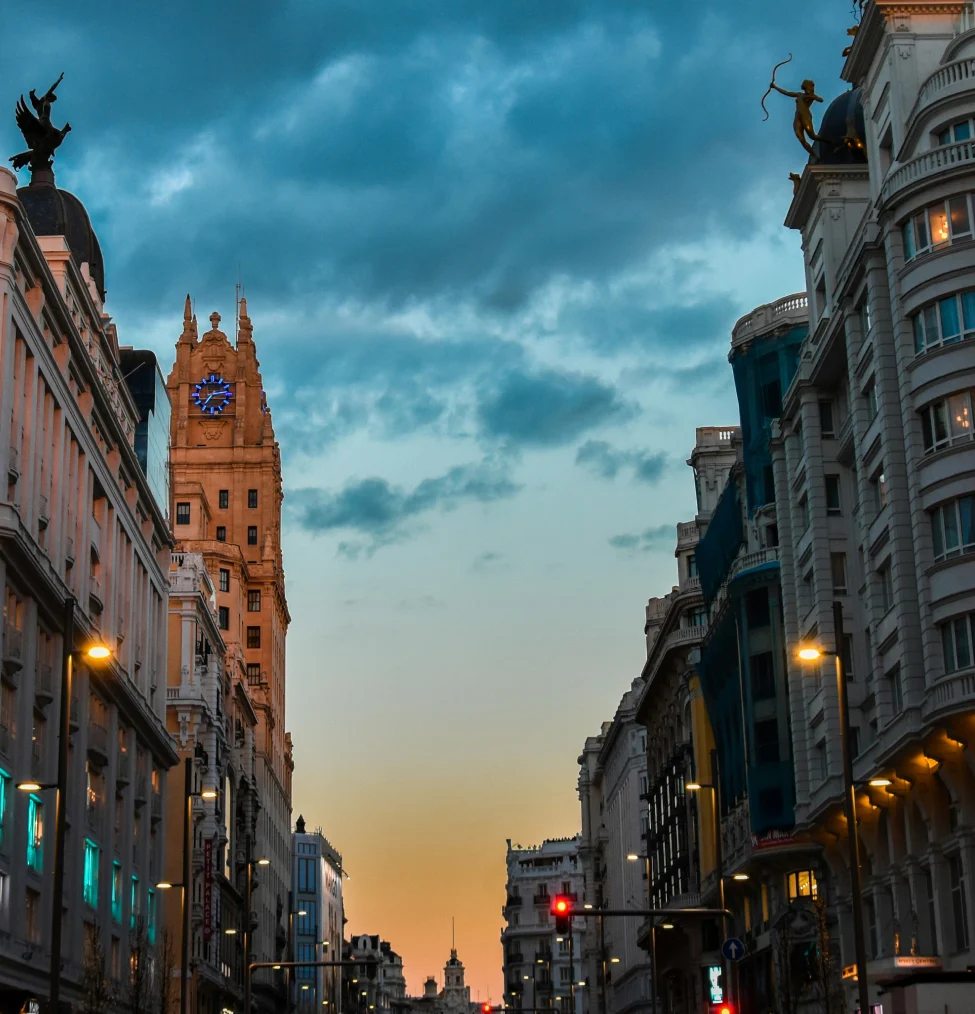
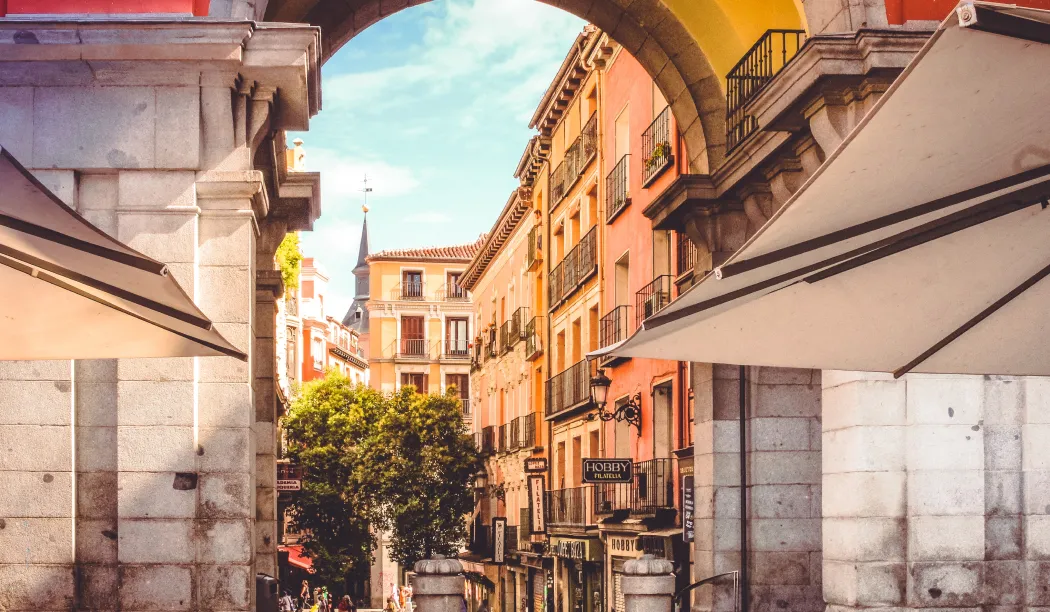
You can’t say you’ve been to Madrid without having explored the Habsburg quarter. The good thing is that it’s practically impossible to pass through the city without setting foot in it, because it is the very centre of the town. Between Puerta del Sol and Bailén street, and between Gran Vía and Atocha street, lies a network of streets and squares where every corner is worth a stop if you’re after a touristy plan.
You can wander through the medieval alleys between Mayor street and Segovia street, forgetting that you’re in the centre of a modern city, and come across magical spots like the Renaissance garden of Príncipe de Anglona. You can visit monuments like the Plaza Mayor,
Ópera square, home to the legendary Teatro Real, and right behind it, Plaza de Oriente, presided over by the Royal Palace (the largest in Europe), next to the Almudena Cathedral.
The Habsburg quarter is the touristy area of Madrid par excellence, but it has managed to keep many of its most traditional icons, like the churros of San Ginés, the cod of Revuelta and Casa Labra, the hat shops of Plaza Mayor or the Seseña cape shop. Between Plaza de la Cebada and Bailén street is the La Latina area, one of the most iconic places to go out for a drink. On sunny Sundays its streets and squares are an absolute party.
2. The Art Walk and the Retiro
Along the Prado-Recoletos axis, between Plaza de Colón and Plaza de Carlos V, you can explore an area that is a UNESCO World Heritage Site for its monumental, architectural, urban and artistic interest. If the Habsburg quarter is the origin of Madrid as the capital of Spain in the 16th and 17th centuries, here you’ll be walking among the treasures built by the Bourbon kings in the 18th century.
Within just a few kilometres you’ll find monuments like the Cibeles and Neptuno fountains, architectural gems like the Bank of Spain or the National Library and an incredible concentration of world-famous museums like the Prado art gallery, the Thyssen-Bornemisza Museum, the Reina Sofía Art Centre or the CaixaForum exhibition hall. At Cibeles you’ll see the impressive Palacio de Correos, now Madrid’s City Hall, where there are also exhibitions and cultural events every day. And if you walk up Alcalá street you can reach Retiro Park, one of the city’s green lungs, with a monumental pond, a spectacular glass palace and one of the few sculptures dedicated to Lucifer in the world.
At the other end is the Las Letras neighbourhood, where you’ll find, in addition to buildings like the Hotel Palace and monuments like the Trinitarias Church (where Cervantes is buried), the streets where many of the great writers of the Spanish Golden Age once lived.
3. El Rastro and Lavapiés
Very close to La Latina is Plaza de Cascorro, the northern end of El Rastro, one of the most famous open-air markets in the world. Every Sunday morning, hundreds of stalls await you with the most varied goods: antiques, crafts, new and second-hand clothes, old records and books, magazines and comics from every era, fossils and minerals… practically anything you can imagine in an area full of life and flavour, where the crowd is part of the show.
After getting lost in the streets of El Rastro, you can dive into those of Lavapiés, one of the most multicultural, traditional and creative neighbourhoods in the city, with restaurants from every nationality, architectural curiosities like the corralas and a multitude of cultural offerings with its many theatres and venues such as La Casa Encendida or La Tabacalera.
4. Madrid Río and El Matadero
Madrid Río is a linear park that follows the Manzanares river for kilometres. It was built over the former route of the M-30 ring road, which was buried underground in 2007, turning a grey and polluted landscape into one of the city’s biggest attractions. It’s wonderful to explore Madrid Río on foot or by bike, to stop at any of its terraces or admire monuments like the Segovia and Toledo bridges.
At the southern end of Madrid Río you’ll find Matadero Madrid, an incredible complex of 19th-century neo-Mudéjar industrial buildings that once supplied meat to the city and now form a great hub of cutting-edge art with exhibition halls, cinemas, theatres, restaurants and outdoor areas you’ll never want to leave. Definitely a must-stop if your favourite plans include the most cutting-edge art.
5. Chueca and Malasaña
Hortaleza street (between Gran Vía and Plaza de Alonso Martínez) divides these neighbourhoods you can’t miss. Chueca is the ultimate symbol of Madrid’s diversity, a true emblem of the LGBTI movement, where everyone is welcome to the hundreds of bars, restaurants and shops scattered along some of the most beautiful and best-kept streets in the city.
Malasaña has been a symbol of modernity for decades, and its main axis is Fuencarral street (between Gran Vía and Bilbao roundabout). In the 70s and 80s it was a very underground area; in fact, La Movida Madrileña was born in some of the bars that still exist, like Penta or La Vía Láctea. Today, this area is still a testing ground for the latest trends, as you’ll see in its shops, restaurants and cocktail bars, but it’s also one of the most charming corners of Madrid. After all, the heart of the neighbourhood is Plaza del Dos de Mayo, where the popular uprising against the French occupation of 1808 began.
6. Ponzano
The capital’s trendiest food and nightlife area is Ponzano street and its surroundings. There you’ll find the most beautiful and modern venues in Madrid, with offerings ranging from traditional to cutting-edge. But its many bars and restaurants aren’t the only attraction. In that area you’ll find the Canal theatres, the Sorolla Museum, the Geomining Museum and the Natural Sciences Museum. In short, it’s an ideal spot for any plan, whether it’s an aperitif, an afternoon drink or a night out.
As you can see, in Madrid there’s always so much to see, so much to do, so much to live, and we’ve only told you a tiny part. And the best thing is that from Be Casa Rivas you’re just minutes from the centre of one of the most exciting cities with the best quality of life in the world, from a modern residential area where you also have everything you need.